Definition of Managed Services
 The buzzword relating to IT Support is “Managed Services”, and every day more and more businesses are jumping on the bandwagon. But what does managed services actually mean and how can you tell if an IT Support company is not just using the word as a marketing tool, but is in fact only offering “flat rate” services packaged as “managed services”?
As a definition, Managed Services allows a business to offload IT operations to a service provider, known as a Managed Services Provider. The managed service provider assumes an ongoing responsibility for 24-hour monitoring, managing and/or problem resolution for the IT systems within a business.
A Brief History of Managed Services
The following is a summarized history of managed services to give you some background relating to how these services have developed. This history pertains specifically to companies who service small network systems.
It all started with break-fix services
The companies who have helped service small networks in the past have been hamstrung by the lack of tools to help with the problem. The networks they service developed as simple systems, usually built by a self taught network amateur-turned-pro. Maintenance was break-fix only, meaning when something broke, the company called and they came running to fix it… hopefully.
As time went on, the best of the support people developed procedures and programs to periodically come on-site to do a system review of logs and user information looking for hints of issues before they became big problems. In some cases an elaborate checklist was used to record disk usage, processor usage, etc.
The problem of course, was that the support people could only see what was happening on that particular day. If something happened later, they would never know about it … unless the customer called.
 Backup problems and other errors continued to occur
Additionally, the only professional test of the backup system was on the visit, which frequently resulted in days or more of missed backups. The system was prone to other human errors when the on-site technician, trying to be accommodating, would take care of the “end user” symptoms and would not have time to address the “real issues”. This created a constant battle for the tech as they tried to convince customers that they were only causing themselves more dangerous problems down the road by not being proactive.


You might also like

|
The Managed Health Care Dictionary Book (Aspen Publishers)
|
Job seeker uses billboard across from Kitchener's Google office to stand out .. — MetroNews Canada
Brumwell-worked in the information technology and project management fields in recent years for companies including Enbridge. Much of his work in the past five years has been on contract, leading him to want to seek out something more permanent.
Low-tech billboard gets high-tech attention — OurWindsor.ca
Brumwell worked in the information technology and project management fields in recent years for companies including Enbridge. Much of his work in the past five years has been on contract, leading him to want to seek out something more permanent.

|
Swarovski Spotting Scope HD ATS-65 High Definition Glass Sports (Swarovski Optics)
|
A privilege to sharing the joy of music — BDlive
Now he teaches the same instrument as part of his work with Buskaid, although he dreams of starting his own project management business "with a few friends", information technology and project management being what he studied after finishing school.

|
Grandstream GS-GXV3500 IP Video Encoder/Decoder CE (Grandstream)
|

|
Microsoft Windows Live OneCare 1.0 For Windows XP Software (Microsoft Software)
|
|
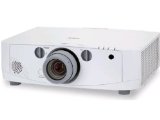
NP-PA600X with NP13ZL. Bundle Incl PA600X Projector and NP13ZL CE (NEC)
|
Q&A

What is definition of “management services”?
The term “management services” is defined as “managing and administering” but the Directive does not go into any detail as to what “managing” means or what “administering” means. It would appear to include investment management, risk management and other services.
Are there operating conditions imposed for AIFMs?

What is the definition of managing quality in services?
I am stuck on a bit of my assignment please could someone help me with the definition of managing quality in services please?
Sam, the managing quality in service is a peer reviewed journal that is devoted to ways of improving quality of service, it is the most effective means od ensuring a competitive advantage in today's global marketplace, it covers the various management aspects of service organizations, of which service quality is an integral component.


